.png)
plant profile
Liquorice
LATIN NAME
Glycyrrhiza glabra
MEANING
Domination; Love; Rejuvenation
.png)
Liquorice
About
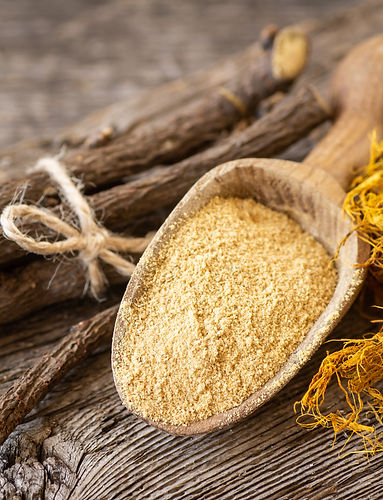
Liquorice’s scientific name is Glycyrrhiza glabra and it belongs to the Papilionaceae family. The roots of the liquorice plant are used.
Active Constituents
Saponins, glycyrrhizin, polyphenols, flavonoids, polysaccharides, bitter principles, tannins, phytoestrogens, coumarins and volatile oil.
Sowing & Growing
Soak the seeds in water for about 24 hours before you start sowing them in pots or trays indoors in late spring, or you can plant them directly outside in early summer. If possible, use plug trays to minimise disturbing the delicate young tap roots when you pot them up. Make sure to plant them out after the frost risk has cleared.
Liquorice does take a bit of time to get started, but once it's established, it can really take off, growing up to around 2 meters tall and becoming bushy. The roots spread out quite a bit, sending up new shoots from the runners, which are what you'll want to harvest for your herbal teas, especially if you're looking to keep the plants from spreading too much.
Harvesting & Prep
You should ideally wait at least three years before you start picking the ‘stolons’ or ‘runners’. Technically, stolons are underground stems, but in simple terms, they’re the roots that spread horizontally. As with any roots, it's best to wait until the leaves start to die back in autumn before you harvest. And remember, don’t dig up the vertical tap root so that the plant can grow back next year. The stolons can extend a few meters underground, so if you want to keep your flower beds undisturbed, make it a habit to harvest regularly.
Once you’re ready, clean the roots and cut them into either 10cm pieces for sticks or 3mm thick slices for tea. Dry them in a well-ventilated space at around 30°C for about 48 hours or until they’re fully dry, then store them in an airtight container away from light.


Therapeutic Properties
Adaptogen, adrenal tonic, anti-allergy, anti-inflammatory, antitussive, bitter (gentle), demulcent, diuretic, expectorant, hepatoprotective and laxative.
Traditional Uses
Liquorice is a superb anti-inflammatory with applications across the body systems for this purpose, including joint and skin inflammation.
It has traditionally been used to soothe inflammation and irritation in the respiratory tract, making it a lovely remedy for irritating coughs and sore throats.
Liquorice is an excellent tonic for the liver, and its bitter actions help promote bile flow, enhancing digestion. As an adaptogen, it can be used to strengthen the body and mind following chronic stress, and it is particularly strengthening to the adrenal glands.

